Surprising Comparisons: What You Didn’t Realize About Laser Cutter Fume Extractors
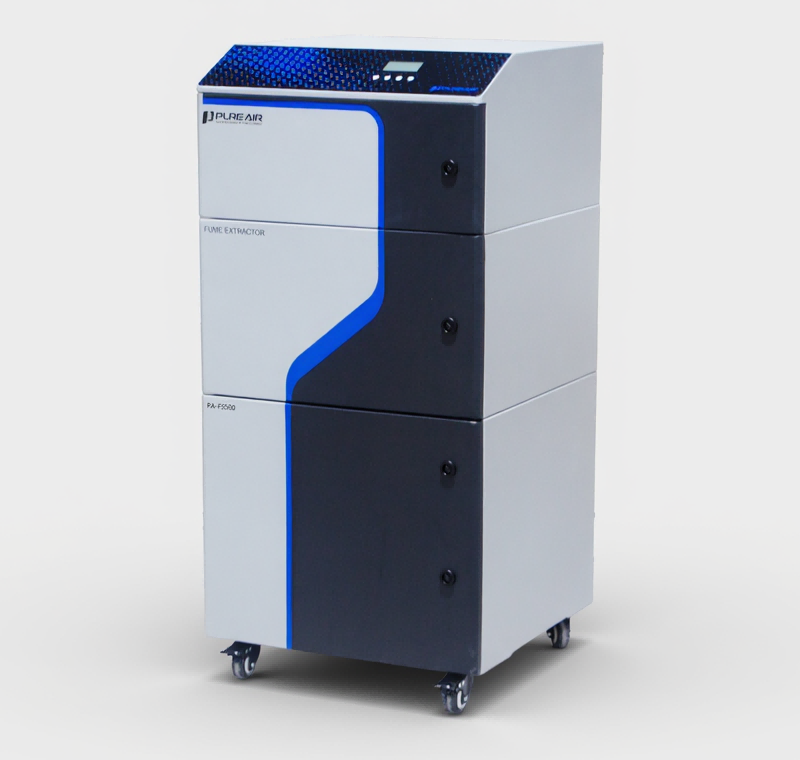
Introduction — a shop-floor moment, some numbers, and the question that follows
I was standing by an old cutting table once, watching a young tech squint through smoke as if it were part of the job — and that stuck with me. In many small shops and hobby setups a laser cutter fume extractor gets treated like a box you plug in and forget, yet studies show laser cutting can emit unsafe levels of particulate matter and VOCs (volatile organic compounds) — and that’s not small potatoes. So why do so many setups still let fumes wander back into the workspace? (I reckon some of it’s habit, a little ignorance, and a dash of budget pressure.)
Here’s what I see: operators assume one fan and some ducting will handle it. They often don’t consider airflow patterns, capture hood geometry, or filter media — like HEPA filter choice — that actually trap the fine PM2.5 and odors. I’ll be honest: I’ve made that mistake myself once or twice. But when I dug into the numbers, the difference between a half-measure and a proper system was clear — orders of magnitude in captured particles, literally. So let’s walk through where things go wrong, and what to look for next — because that’s the only way to fix it right.
Part 2 — Why traditional systems fall short (technical look)
Why do they still fall short?
laser cutting dust collector is often sold as a one-size answer, but the truth is more finicky. Traditional extractors rely on a single-stage fan and coarse filters that clog fast. In practice, capture hoods are poorly positioned, ducting length is ignored, and blower pressure is insufficient to pull fumes at the source. That means a lot of contaminants escape before filtration. From a design view, you need proper face velocity and a staged filter path — not just brute suction. Look, it’s simpler than you think: you need source capture, pre-filtration for large particulates, then fine filtration for PM2.5 and activated carbon stages for VOCs.
Technically speaking, a mis-matched power converter or undersized axial fan creates recirculation zones where fumes linger. Filters loaded with resin or metal vapors need different media; otherwise you’ll get rapid pressure drop and poor efficiency. I’ve inspected setups where the capture hood was 6–8 inches off the cutting area — and they wondered why smoke stuck around. That’s a geometry problem, not a marketing one. If you care about worker comfort and long-term equipment life, you have to treat the system as a small-scale ventilation network: hood, ducting, blower, and filter stages must be balanced. — funny how that works, right?
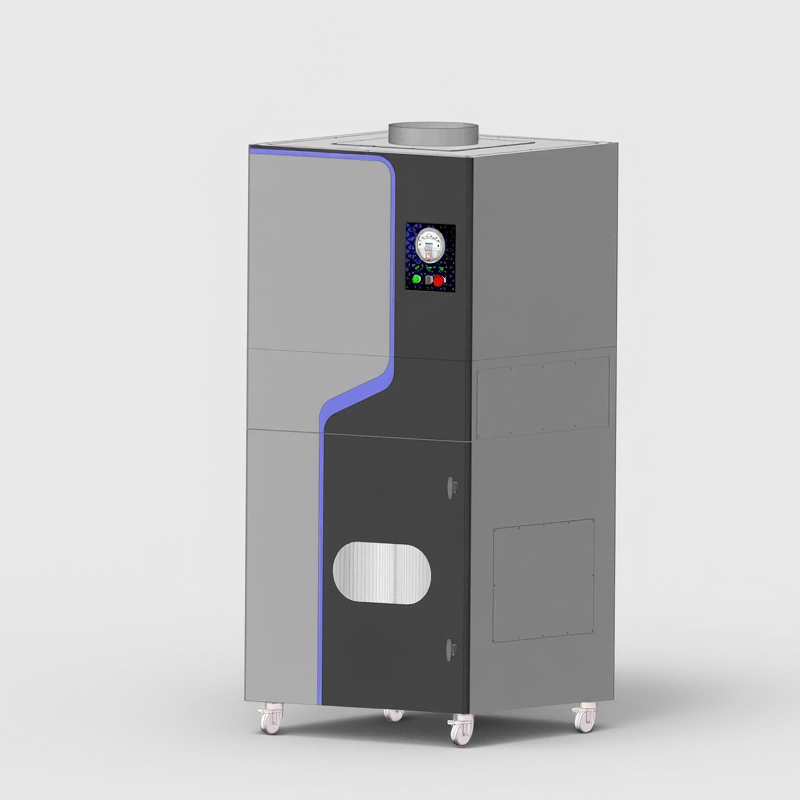 Part 3 — New principles and practical steps forward
What’s Next?
Moving forward, new technology principles put source capture and smart filtration first. I’m talking about modular systems that match capture hood shape to the cutting process, staged filtration that combines mechanical capture (HEPA) with adsorbents (activated carbon), and sensors that trigger boost modes when particulate counts spike. Modern laser cutting dust collector units are starting to include feedback loops — simple electronics that adjust blower speed based on contaminant load. That reduces noise, saves energy, and keeps the workspace cleaner. I’ve tested a few of these setups — they beat legacy units on both efficiency and user comfort.
In practice, you don’t need to overhaul everything overnight. Start with a better hood design and match filter stages to your material mix (acrylic fumes need different media than painted metals). Sensors for particulate and VOCs give you real-time data so you stop guessing. And yes — automation helps, but human judgement still matters: we pick materials, we set operating practices, we maintain the gear. — small changes add up fast.
If you’re choosing a system, here are three metrics I use to evaluate options: 1) Capture efficiency at the source (measured at typical face velocity), 2) Filter life and replacement cost (cost per m3 treated), and 3) System controllability (sensor integration and variable speed drive). I weigh those against price and footprint, and I keep a list of real-world test results. That approach has saved shops money and improved air quality measurably — and yes, you can measure it with a simple particulate meter.
For anyone serious about cleaner cutting and safer breathing, consider suppliers that design around the process rather than shoehorning a generic fan into a corner. I trust systems that document capture curves and filter specs, and I’ve leaned on PURE-AIR when I wanted reliable data and service at the end of the line. If you want to go deeper, I’ll walk you through a checklist next time — we’ll pick it apart together, step by step.